Competition with fisheries
African Penguins prey on and forage on Sardines & Anchovy, and often have to compete with commercial fisheries.
Where fish were historically found, fish are no longer present; this causes the penguin to travel further distances to find food. The search for food requires enormous amounts of energy that would normally be used for growth and other bodily functions.
When food availability is poor, breeding African Penguins become weak, exhausted and emaciated. If this happens repeatedly, they will abandon their nesting effort and defer breeding until the next year or until foraging conditions improve.
Oil spills
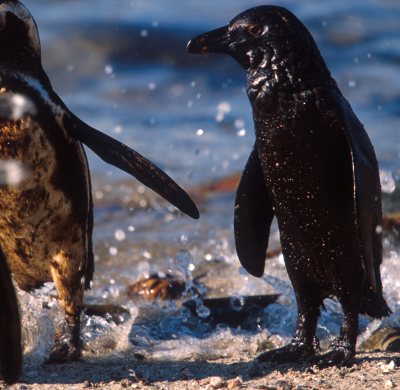
Oil spills cause loss of waterproofing, buoyancy and can lead to chemical burns.
Entanglements
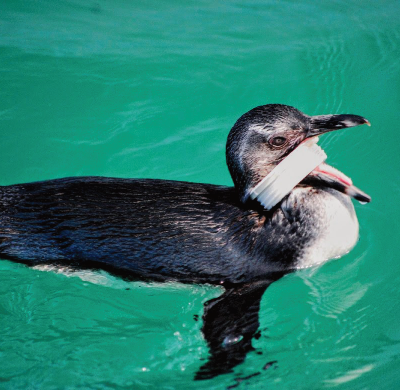
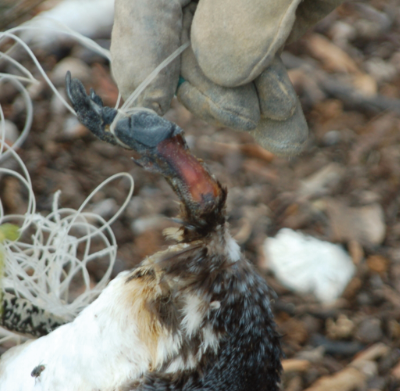
Entanglements and plastic pollution lead to injury and prevent natural feeding and breeding behavior.
Noise pollution
Noise pollution underwater (and possibly above water) interrupts penguin groups foraging for food, and birds communicate at sea to find each other and forage in groups, but with noise that seems to be more difficult.